
Selling property in New York City means competing for attention in one of the world’s most crowded real estate markets. Facebook ads give sellers a way to cut through the noise and put listings in front of buyers who are actually ready to move.
Why Facebook Works for NYC Real Estate
Facebook’s targeting tools let you reach specific buyer profiles. You can target people based on income, age, location, job title, and recent life events like relocations or promotions. For NYC sellers, this means showing a Tribeca loft to finance professionals or a Brooklyn townhouse to growing families looking to leave Manhattan.
The platform also tracks behavior. If someone recently searched for mortgage information, visited real estate sites, or engaged with property content, Facebook knows. Your ads can reach these people before they ever land on Zillow or StreetEasy.
Setting Up Campaigns That Convert
Start with a clear goal. Most NYC sellers want one thing: inquiry volume from qualified buyers. This means running lead generation campaigns, not just boosting posts for likes.
Create separate ad sets for different property types and neighborhoods. A one-bedroom in the Financial District needs different messaging than a multi-family in Astoria. Splitting campaigns lets you control spend and test what works for each listing.
Budget matters. In NYC, expect to spend $30 to $80 per qualified lead depending on the property price point. A $2 million condo will cost more per inquiry than a $600,000 co-op, but the returns justify it.
Creative That Stops the Scroll
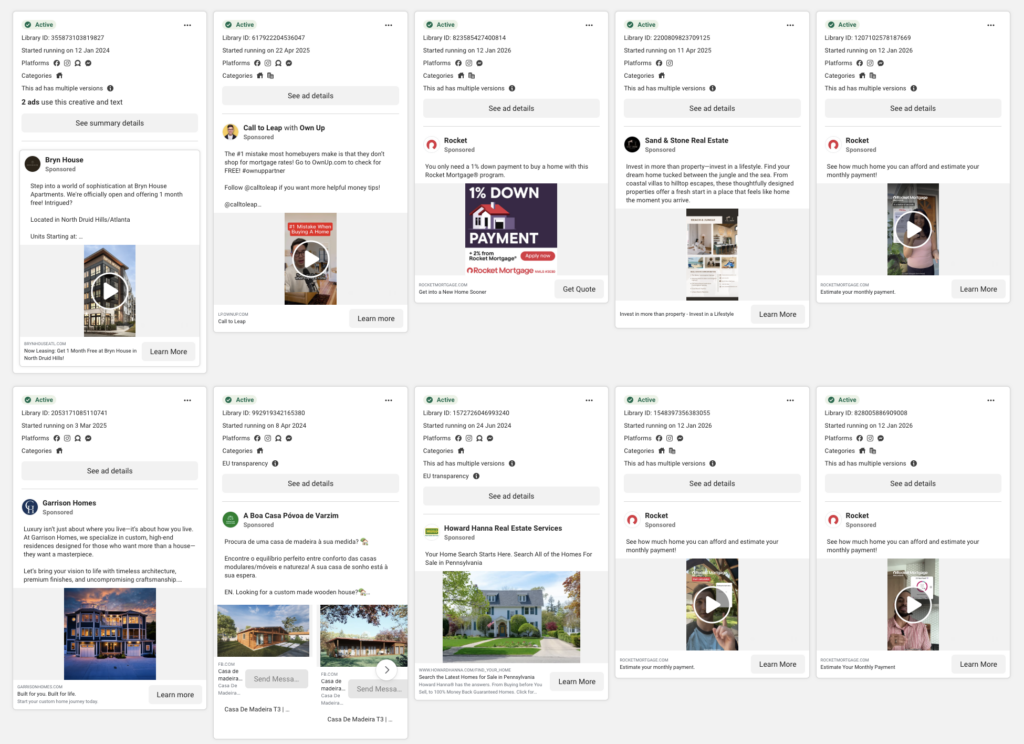
Photos sell properties, but on Facebook, the first image needs to grab attention in under two seconds. Use exterior shots that show the building and neighborhood context. NYC buyers care about location as much as the unit itself.
Include key details in the ad copy: price, bedrooms, square footage, and neighborhood. Don’t make people click through just to learn basic information. The faster they understand the opportunity, the faster they inquire.
Video works even better. A 30-second walkthrough showing the layout, natural light, and views generates more engagement than static images. You don’t need professional production. Clean phone footage with good lighting is enough.
Targeting the Right Buyers
Geographic targeting goes beyond “New York City.” Target specific zip codes where your ideal buyers currently live. Selling in the Upper West Side? Target Upper East Side residents looking for more space. Selling in Williamsburg? Target Manhattan renters priced out of their neighborhoods.
Layer in demographic filters. Income level is critical. If you’re selling a $1.5 million property, target households making $250k+. Age range matters too. A luxury high-rise appeals to different age groups than a brownstone renovation.
Use lookalike audiences based on past buyers or website visitors. Facebook finds people who match the profile of those who already showed interest. This expands your reach without guessing.
Landing Pages That Actually Convert
Don’t send clicks to your main website or a generic listing page. Build a dedicated landing page for each property with one purpose: capture contact information.
Include a photo gallery, floor plan, building amenities, and neighborhood highlights. Add a simple form asking for name, email, and phone. The fewer fields, the better the conversion rate.
Show social proof. If the building has good reviews, if units sold quickly in the past, or if you’ve sold similar properties, mention it. NYC buyers want confidence they’re not wasting time.
Tracking What Works
Install Facebook Pixel on your landing pages. This tracks every visitor, form submission, and conversion. You’ll see which ads drive inquiries and which waste budget.
Track cost per lead weekly. If you’re paying $100 per inquiry when the market average is $50, either your targeting is off or your creative needs work. Adjust fast.
Watch which neighborhoods and property types perform best. Double down on what converts. If ads for two-bedrooms in Queens outperform studios in Manhattan, shift budget accordingly.
Remarketing to Close the Deal
Most buyers won’t inquire on the first visit. Set up remarketing campaigns to show follow-up ads to people who clicked but didn’t convert.
Change the message. The first ad introduced the property. The second should address objections: financing options, open house dates, or price adjustments. Give them a new reason to act.
Remarketing costs less than cold traffic. You’re reaching warm leads who already know the property. A small daily budget can keep you in front of serious buyers until they’re ready to reach out.
Common Mistakes to Avoid
Boosting posts instead of running proper campaigns. Boosted posts optimize for engagement, not leads. You’ll get likes from people who can’t afford your property.
Using the same ad for every listing. Each property needs its own campaign with specific targeting and creative. Generic ads get ignored.
Ignoring mobile users. Over 80% of Facebook users browse on phones. Your landing pages need to load fast and display properly on small screens. A slow or broken mobile experience kills conversions.
Setting budgets too low. $10 a day won’t generate meaningful results in NYC. Start with at least $50 daily per property to gather enough data for optimization.
What Good Results Look Like
A well-run Facebook campaign for NYC real estate should generate 20 to 40 leads per month per listing at $30 to $80 per lead. Luxury properties over $2 million may see 10 to 15 inquiries monthly at higher costs.
Not every lead will qualify, but expect 30% to 50% to be serious buyers worth following up with. The rest will be investors, renters, or people outside your price range. Filter quickly and focus on the real prospects.
The key is consistency. Facebook ads work best when you run them continuously, not in short bursts. Steady spend builds momentum and keeps your listings in front of buyers throughout their search process.
Getting Started
Pick your best listing and start with one campaign. Test different images, headlines, and targeting options for two weeks. Use the data to refine your approach before scaling to other properties.
Track every inquiry back to the ad that generated it. This shows which campaigns justify higher budgets and which need to be paused. In NYC real estate, where every lead counts, knowing your numbers separates successful sellers from the rest.